Why Eco-Friendly Bags Are Becoming Essential in a Sustainable World
As consumers and businesses become increasingly aware of environmental challenges, the demand for eco-friendly bags has grown significantly across the globe. From retail stores and supermarkets to fashion brands and corporate gifting companies, sustainable alternatives are replacing conventional plastic bags at an unprecedented pace.
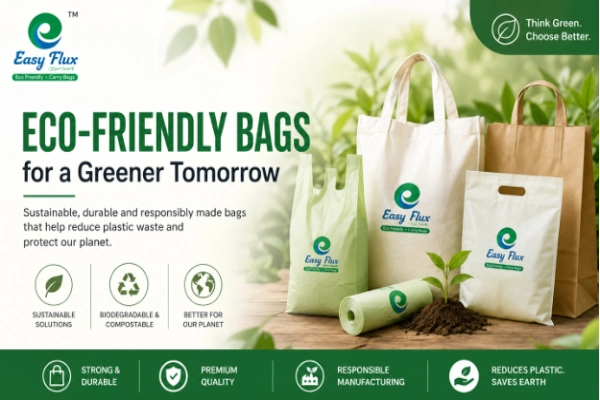
Today Easy Flux Polymers Private Limited, biodegradable bags, compostable bags, reusable shopping bags, jute bags, organic cotton bags, hemp bags, bamboo bags, and recycled fabric bags are no longer niche products—they are becoming the standard for responsible businesses and environmentally conscious consumers.
By switching to sustainable bags, individuals and organizations can reduce plastic pollution, lower carbon emissions, and contribute to a cleaner and greener future.
What Are Eco-Friendly Bags?
Eco-friendly bags are reusable or naturally degradable bags manufactured using sustainable materials that have minimal environmental impact throughout their lifecycle.
Unlike traditional single-use plastic bags, these alternatives are designed to:
- Reduce waste generation
- Minimize carbon footprint
- Support circular economies
- Promote sustainable consumption
- Encourage responsible packaging practices
Popular eco-friendly materials include:
- Organic Cotton
- Recycled Cotton
- Hemp
- Bamboo Fiber
- Jute
- Juco Fabric
- Cotton Muslin
- Cotton Canvas
- Vegan Leather
- Recycled Textiles
These materials offer durability, versatility, and biodegradability while supporting ethical manufacturing practices.
Why Plastic Bags Are Harmful to the Environment
Traditional plastic bags may remain in landfills and oceans for hundreds of years. They contribute significantly to:
- Marine pollution
- Soil contamination
- Wildlife hazards
- Greenhouse gas emissions
- Microplastic accumulation
According to environmental studies, millions of plastic bags enter ecosystems annually, causing long-term ecological damage. As governments worldwide impose restrictions on single-use plastics, businesses are increasingly adopting biodegradable and compostable alternatives.
Types of Eco-Friendly Bags
1. Biodegradable Bags
Biodegradable bags are manufactured using materials capable of breaking down naturally through microorganisms over time.
Key Benefits
- Reduced environmental impact
- Less landfill accumulation
- Suitable for retail and grocery applications
- Available in various sizes and styles
Biodegradable bags are increasingly preferred by brands seeking sustainable packaging solutions.
2. Compostable Bags
Compostable bags go one step further. They decompose into natural elements under composting conditions without leaving toxic residues.
Advantages of Compostable Bags
- Environmentally safe
- Non-toxic decomposition
- Supports zero-waste initiatives
- Suitable for food and organic waste applications
Many businesses now choose compostable packaging to align with sustainability goals and consumer expectations.
3. Organic Cotton Bags
Organic cotton bags are produced using cotton cultivated without harmful chemicals and pesticides.
Why Organic Cotton Bags Are Popular
- Soft and durable
- Reusable and washable
- Biodegradable
- Ideal for promotional and retail packaging
- Suitable for custom branding
Organic cotton tote bags have become a preferred option among eco-conscious brands and lifestyle companies.
4. Jute Bags
Jute is one of the most sustainable natural fibers available.
Benefits of Jute Bags
- Highly durable
- 100% biodegradable
- Renewable resource
- Attractive natural texture
- Excellent for shopping and gifting
Jute bags are widely used in retail, hospitality, agriculture, and promotional industries.
5. Hemp Bags
Hemp is recognized as one of the most eco-friendly fibers in the world.
Advantages of Hemp Bags
- Strong and long-lasting
- Naturally antimicrobial
- Requires less water for cultivation
- Fully biodegradable
- Resistant to wear and tear
Hemp bags combine sustainability with premium aesthetics, making them suitable for fashion and lifestyle brands.
6. Bamboo Bags
Bamboo is among the fastest-growing renewable resources on earth.
Features of Bamboo Bags
- Sustainable and renewable
- Lightweight yet durable
- Naturally antibacterial
- Soft texture
- Environmentally friendly production
Bamboo bags are increasingly gaining popularity in premium and luxury packaging markets.
7. Recycled Cotton Bags
Recycled cotton helps minimize textile waste while conserving water and energy.
Why Recycled Cotton Bags Matter
- Supports circular economy practices
- Reduces landfill waste
- Conserves natural resources
- Lowers environmental impact
- Promotes sustainable manufacturing
Businesses seeking ESG compliance and sustainability certifications often prefer recycled cotton products.
Benefits of Using Eco-Friendly Bags
Reduced Carbon Footprint
Natural and recycled materials require fewer resources and generate lower greenhouse gas emissions compared to plastic.
Reusability
Most sustainable bags can be reused hundreds of times, making them cost-effective and environmentally responsible.
Improved Brand Image
Consumers increasingly support brands that prioritize sustainability.
Using eco-friendly bags demonstrates:
- Corporate responsibility
- Ethical manufacturing
- Commitment to environmental protection
- Long-term sustainability goals
Compliance With Environmental Regulations
Many countries are implementing restrictions on single-use plastics. Sustainable bags help businesses comply with evolving regulations while maintaining customer trust.
Enhanced Customer Experience
Modern consumers appreciate:
- Durable packaging
- Premium appearance
- Reusable functionality
- Eco-conscious choices
These factors positively influence customer loyalty and brand perception.
Applications of Sustainable Bags
Eco-friendly bags are used across numerous industries.
Retail and Shopping
Reusable shopping bags have become a preferred alternative to plastic carriers.
Corporate Gifting
Customized eco-friendly bags offer practical and sustainable branding opportunities.
Fashion Industry
Organic cotton and hemp bags complement sustainable fashion initiatives.
Hospitality Sector
Hotels and resorts increasingly adopt eco-friendly packaging and accessories.
Grocery Stores
Biodegradable and compostable bags help reduce plastic waste.
Trade Shows and Events
Branded sustainable bags enhance visibility while promoting environmental responsibility.
Custom Eco-Friendly Bags for Businesses
Customization enables companies to create packaging solutions aligned with their branding and operational requirements.
Popular customization options include:
- Screen printing
- Digital printing
- Embroidery
- Logo branding
- Size variations
- Color options
- Fabric combinations
- Premium finishes
Customized sustainable bags are particularly effective for:
- Retail brands
- Fashion labels
- Corporate gifting companies
- Event organizers
- Hotels and resorts
- E-commerce businesses
Sustainable Materials Driving the Future of Packaging
Several natural fibers are shaping the next generation of environmentally responsible products:
Organic Cotton
Soft, breathable, and biodegradable.
Hemp
Strong, durable, and resource-efficient.
Bamboo
Fast-growing and renewable.
Jute
Economical and highly sustainable.
Recycled Cotton
Supports waste reduction and circular economies.
Vegan Leather
Cruelty-free alternative to conventional leather.
These materials are helping businesses transition toward greener manufacturing practices and responsible consumption.
Frequently Asked Questions
Are eco-friendly bags better than plastic bags?
Yes. Eco-friendly bags reduce environmental pollution, support sustainability, and can be reused multiple times.
Are biodegradable bags compostable?
Not always. While all compostable bags are biodegradable, not all biodegradable bags meet compostability standards.
Which material is best for reusable bags?
Organic cotton, hemp, bamboo, jute, and recycled cotton are among the most durable and environmentally friendly options.
Can eco-friendly bags be customized?
Yes. Sustainable bags can be customized with logos, colors, designs, and branding elements to suit individual business requirements.
Why are businesses switching to sustainable packaging?
Increasing consumer awareness, government regulations, and ESG initiatives are encouraging businesses to adopt environmentally responsible packaging solutions.
The Future of Eco-Friendly Bags
Sustainability is no longer a trend—it is becoming a necessity.
As global awareness around climate change and waste reduction continues to grow, eco-friendly bags, biodegradable bags, compostable bags, reusable shopping bags, organic cotton bags, hemp bags, bamboo bags, and recycled cotton bags will play an increasingly important role in shaping responsible consumer behavior.
Businesses that embrace sustainable packaging solutions today are investing not only in environmental stewardship but also in stronger customer relationships and long-term brand value.
Choosing eco-friendly bags represents more than a packaging decision—it reflects a commitment to building a cleaner, healthier, and more sustainable future for generations to come.
“`